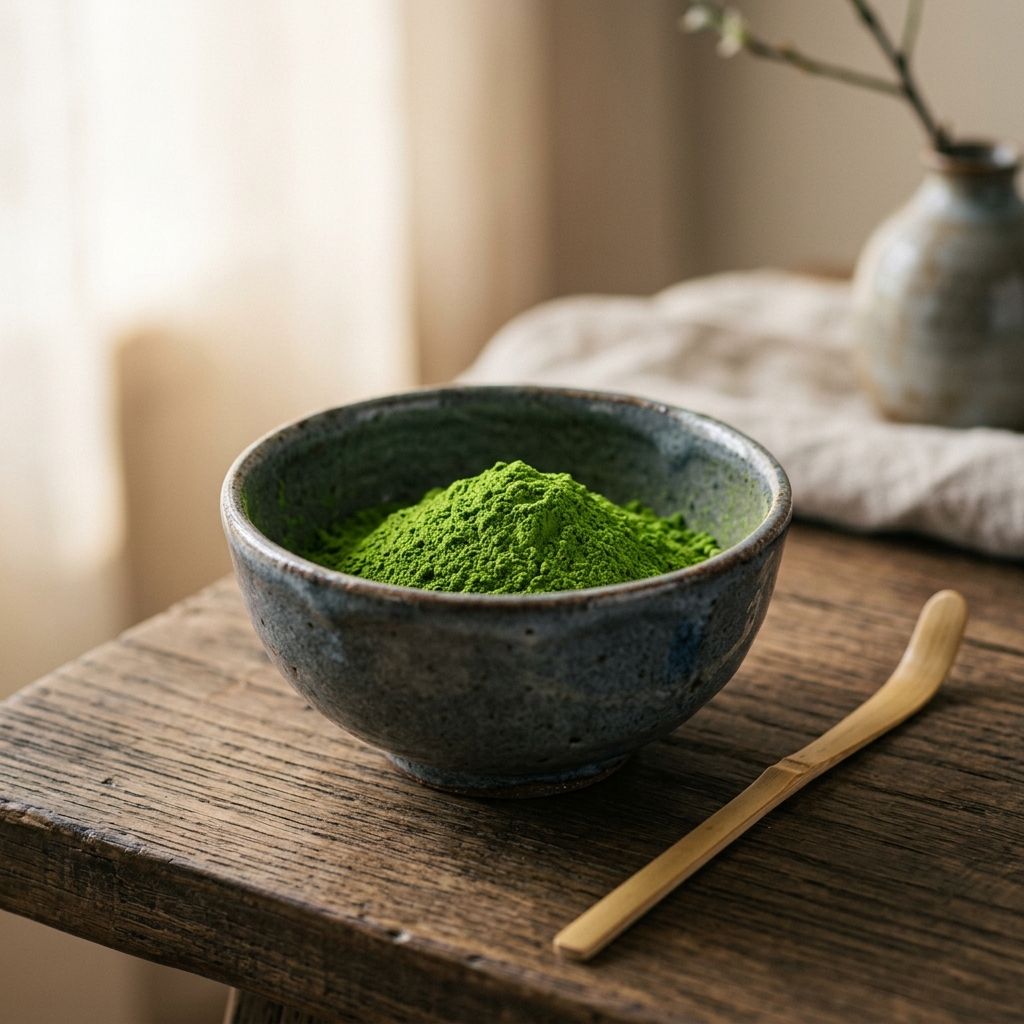
Matcha is not merely a powder; it is a complex biological art form. From the volcanic soil composition to the precise timing of harvest and steam control, every step shape-shifts its molecular profile. For the curious drinker, evaluating matcha quality requires engaging all the senses—eyes, nose, and palate. Understanding these subtle variations allows you to make informed selections aligned with how you intend to enjoy it.
Whether you are preparing a meditative, whisked cup of thin tea (Usucha), or incorporating the green leaves into a morning latte or baked goods, matching the grade to the application is key to an exceptional taste experience.
"The quality of matcha is not determined by its price, but by the care taken at every stage of its journey—from shade to stone."— AMACHI TEA STUDIO
Part 1: Evaluating Matcha Quality
To assess the quality of your matcha, look for the following four fundamental indicators:
- Color: High-quality matcha exhibits a vibrant, electric jade-green color, indicative of high chlorophyll content achieved through careful shading of the tea bushes. Lower quality matcha tends to look dull, yellowish, or even brownish due to oxidation, late harvests, or the inclusion of mature leaves and stems.
- Texture & Grind: High-grade matcha is stone-ground to an extremely fine powder (about 5-10 microns, like talcum powder). When rubbed between your fingers, it should feel silky and leave a clean swipe. Coarser, gritty powders signify a fast, mechanical grind that generates heat, burning the delicate flavor.
- Aroma: Premium matcha has a clean, sweet, and vegetal aroma, often accompanied by a distinct savory scent known as L-theanine umami. Low-quality matcha will smell flat, hay-like, dusty, or overly bitter.
- Taste & Aftertaste: When whisked with water, high-grade matcha yields a creamy, smooth texture with a sweet umami flavor and minimal astringency. A clean, lingering sweet aftertaste (hui gan) is the ultimate sign of premium cultivation. Lower-grade matcha tastes harsh, sandy, and unpleasantly bitter.
Part 2: Understanding the Grades
While terms like "Ceremonial Grade" are not regulated by law, they generally represent distinct steps in the harvest and processing pipeline:
- Ceremonial Grade: Ground exclusively from the first harvest (shincha) of spring, using only the tenderest top leaves. The leaves are carefully destemmed and deveined, leaving pure tencha. Whisked purely with hot water, it reveals delicate, multi-layered tasting notes.
- Premium Latte / Blend Grade: Often a blend of late-spring harvests. It possesses a slightly stronger, punchier character that cuts through the fats of milk and sweeteners while retaining a pleasant green hue.
- Culinary / Baking Grade: Usually harvested in summer or autumn from lower leaves. It has a higher concentration of catechins, which results in a bolder, bitter profile that stands out beautifully when baked or cooked.
Part 3: Matching Grade to Intended Use
Choosing the right matcha depends entirely on your preparation method:
01. Straight Drinking
For preparing Usucha (thin) or Koicha (thick) without milk or sugar.
Ceremonial Grade02. Lattes & Smoothies
For drinks where matcha is combined with dairy, plant milks, or ice.
Premium Latte Grade03. Baking & Sweets
For ice cream, cookies, cakes, and other confectionery.
Culinary GradeUsing an expensive ceremonial-grade matcha in a cookie recipe is a waste, as its delicate nuances will be masked by flour and sugar. Conversely, using a culinary-grade matcha for a straight tea ritual will result in a bitter, unpleasantly astringent cup. By keeping a selection of grades in your kitchen, you can match each leaf to its perfect purpose.